Friday, October 13, 2017

Research Proves EFT Is an Effective Treatment for Depression

Depression is one of the most difficult kinds of issues to treat and manage. It costs both individuals and society millions of dollars every year in both traditional therapy and prescription medications. But there IS a better alternative, with 10 years of research to back it up.

With the Internet, you can find compelling documentation for pretty much anything.

So, when we look at practices like EFT in research studies, there are ways of both structuring and evaluating studies that help researchers and practitioners get as close to the “truth” as possible.

One way is to conduct what’s called a meta-analysis - an examination of multiple studies on the same topic over a given period of time.

That’s what researchers Nelms and Castel did to evaluate the use of Tapping to alleviate depression. They looked at a variety of research papers published between 2005 and 2015 about the effects of using EFT Tapping therapy on depression. Here’s what they found out… 

Only the Best Studies

Their first step in their meta-analysis was to find the relevant documentation with a diverse variety of study criteria.

One criteria wanted, was diversity in demographics (age, geographic location, gender, etc).

They also chose to include both randomized controlled trials in peer-reviewed journals (which are considered the blue-ribbon standard in research) in addition to outcome studies to increase the sample size.

Finally, the team selected studies that met the American Psychological Association’s strict criteria when evaluating treatments.

From their efforts, the authors chose to include 20 studies in total: 12 RCTs with 398 participants, and 8 outcome studies with 461 participants.

For each study, they looked at and compared depression symptoms at three different intervals: just after the trial, follow-up in less than 90 days, and follow-up in more than 90 days.

Tapping Is Extraordinarily Effective in Treating Depression

Despite being very selective about the studies, the researchers found that there is more than ample evidence to support that EFT substantially reduces symptoms of depression at all three recorded time intervals. The authors calculated that there was a “weighted mean” reduction in depression symptoms by a whopping 41%.

Interestingly, the researchers also looked at meta-analyses of psychiatric medication and therapy studies, and discovered that tapping reduced depression symptoms at a much higher rate than either of those accepted treatments.

To have a meta-analysis with such a strong conclusion, that EFT works as a treatment for depression, is a golden opportunity.

It’s our hope that readers will spread the word about this inexpensive, safe, accessible, and highly effective modality that people can learn and then apply themselves.

For people suffering as much as those with depression do, learning about EFT could be a life-changing moment.

Spread the word!

Until next time…

Keep Tapping!

Nick Ortner


How would your life change if you could free yourself from depression? Comment below.

The following blog post Research Proves EFT Is an Effective Treatment for Depression was originally seen on: The Tapping Solution, LLC

Thursday, October 12, 2017

From Panic to Peace – A Tapping Meditation

It wasn’t until I began Tapping that I began to really “get” the value of mindful awareness of my experiences.

With Tapping, this tool can quickly transform my physiology, my state of mind, and my emotional experience of the day that I may, or may not have, planned. (You know how that goes right? Especially if you have young kids) ;)

As with so many things, awareness is a skill, and to get good at it, we have to practice. Even now I don’t always do that perfectly, but I've practiced enough to recognize when things may have gotten off track.

Today, to help you practice finding some more calm in your life, I’ve pulled a really short Tapping Meditation from Day 1 (Chapter 1) of my audiobook, "The Tapping Solution for Manifesting Your Greatest Self", for you to tap along with.

It’s just 6 minutes long and is great for anxiety, overwhelm, fear, and other stress. Give it a try and see how you feel afterwards!

Day 1: From Panic to Peace Tapping Meditation

Until next time...

Keep Tapping!

Nick Ortner


How did you feel after tapping along with this meditation? Calmer? More relaxed or at peace? Comment below!

From Panic to Peace – A Tapping Meditation was originally published to: http://www.tappingsolution.com/

Wednesday, October 11, 2017

A Possum, a Polar Bear, and a Rabbit: Understanding the Freeze Response

One of the steps to manifesting your greatest self is to understand why your body behaves the way it does when anxiety, stress, or fear set in. To help, I'm sharing the entire chapter for Day 11 of my book, "The Tapping Solution for Manifesting Your Greatest Self". Enjoy!


DAY 11: A Possum, a Polar Bear, and a Rabbit: Understanding the Freeze Response

It’s a heartbreaking sight.

By all appearances, the polar bear, the rabbit, and the possum are dead. Their eyes are open, but their gazes are completely still. When a human approaches and moves their limbs, even rolling their entire bodies from side to side, none of the animals react. Their bodies are stiff, as if in rigor mortis.

Seconds turn into a minute, maybe longer, but still no visible signs of life.

With no warning, the polar bear’s body begins to twitch, then shake. His eyes still appear fixed, as if in a trance. The shaking grows more intense. The bear’s mouth begins making small biting movements, and his paws appear to be scratching at something.

This enormous, powerful animal seems to be fighting off some kind of attack, yet he lies on its back, biting and clawing at thin air.

The shaking soon overtakes the bear’s entire body. His massive frame convulses continuously, as if acting out his instinctive desire to fight back against attack.

It’s quite a sight watching this animal in the throes of what seems like a seizure. Yet it’s unclear exactly what’s happening or what’s coming next.

Will he “come to” when we least expect it? Will he jump up and attack for real? Will he return to a nonresponsive state? It’s impossible to tell.

His body’s shaking and convulsing slow down, then stop. He takes a few deep inhalations and exhalations that appear purposeful as well as effective. Seconds later, the bear rises to his feet, resuming his normal stride without any indication of physical or mental damage.

Similarly, the possum and rabbit also lying on their backs, paws extended up in the air, their bodies completely still.

Without warning, their bodies begin to twitch. Each animal then rolls onto its stomach, gets up, and scurries away. Again, there is no sign that they’ve been hurt. In fact, they seem perfectly fine, as if the entire episode never happened.

Have you ever heard the expression “playing possum”? When animals in the wild are threatened by predators but unable to fight or flee, some are known to play dead. Also known as the freeze response, this reaction to trauma is a powerful survival technique.

Some predators require a chase and/or fight to stimulate their hunger, and in its absence, they simply lose interest. By playing possum, potential prey are able to survive situations that would otherwise lead to certain death.

Once the need for playing possum has passed—the predator has lost interest and wandered off—animals literally shake off the trauma they’ve survived. This process of releasing the aftereffects of trauma from their bodies prevents longterm damage to their mental, emotional, and physical states.

The freeze response is an equally instinctive survival technique in humans when we feel powerless against attack, whether that attack is physical or emotional. Unfortunately, unless and until we shake the trauma off, or release the trauma from the body and “primitive brain,” we remain stuck, to varying degrees, in a traumatized state.

Yesterday we looked at releasing painful events from childhood. Today we move that process further along by examining where in your life you feel frozen, unable to take action, make changes, and/or show up as you want and expect to.

If you don’t immediately recognize the freeze response in yourself, stay with me. It often takes a little digging around to notice the role it’s playing in your life.

THE “FROZEN” BRAIN

It was a nice morning in September 1999 when Stan Fisher and Ute Lawrence, a professional couple in their 40s, set out to drive from their home in Ontario, Canada, to a business meeting in Detroit.

About halfway into their journey, visibility was suddenly reduced to zero by a wall of dense fog. Unable to see in front of the car, Stan hit the brakes, narrowly avoiding an enormous truck. Their car soon came to a standstill sideways on the highway.

The next several seconds were a blur of screeching and crashing sounds, some coming from their own car being hit and then jolted repeatedly in several directions.

Stan and Ute’s car was number 13 in an 87-car pileup, the worst road disaster in Canadian history.

Following the deafening cacophony was an eerie silence. As soon as the car stopped moving, Stan sprang into action, desperately trying to open doors and windows. Nearby cars caught on fire, and both Stan and Ute heard people screaming for their lives.

Neither could help, as they themselves were trapped inside their car, which was partially wedged underneath an 18-wheeler.

Eventually someone reached their car, fire extinguisher in hand, and smashed Stan and Ute’s front windshield. After being lifted out, Stan reached in to help Ute, who sat paralyzed in her seat, unable to move or speak.

Eventually both of them were taken by ambulance to the hospital, where they were examined. Their cuts and bruises were bandaged, and both were deemed otherwise physically unharmed.

Three years passed before Stan and Ute sought out help for their recurring PTSD symptoms, which included difficulty sleeping, irritability, and increased alcohol intake to numb their painful memories.

To begin their trauma recovery treatment, Stan’s and Ute’s brains were scanned separately. Stan went first. As he was prompted to recall sights, sounds, and smells from the crash, he went into a full-fledged flashback. His brain quickly became overly activated in areas associated with fleeing and fighting. His heart also began to race, his body perspired, and his blood pressure rose to dangerously high levels.

Ute’s brain scan showed something different altogether. Upon being prompted to recall sensory experiences from the crash, her brain showed decreased activity; it essentially went quiet. Her heart rate also slowed down. She didn’t sweat or show any bodily signs of fleeing or fighting.

Both Stan and Ute were stuck in the trauma they’d survived, but each was having a different experience. While Stan’s body went into an immediate, extreme fight-or-flight response, Ute froze. Her mind went blank, and her body was rendered immobile.

Ute’s freeze response, her trauma therapists learned, dated back to early childhood. After Ute’s father died when she was very young, Ute had been forced to live with her mother, a harsh and hypercritical woman. As a young child, Ute’s only defense was to numb out and disappear mentally and emotionally from her circumstances. When faced with trauma as an adult, Ute reenacted
this same response.

When the old brain takes over, it partially shuts down the higher brain, our conscious mind, and propels the body to run, hide, fight, or, on occasion, freeze . . .  If for some reason the normal response is blocked—for example, when people are held down, trapped or otherwise prevented from effective action . . .  the brain keeps secreting stress chemicals, and the brain’s electrical circuits continue to fire in vain. Long after the actual event has passed, the brain may keep sending signals to the body to escape a threat that no longer exists.

Since the freeze response is most likely to happen when we feel powerless, it’s especially common in children, including in situations that aren’t life threatening. Lack of affection, harsh treatment, excessive punishment, and more can all feel traumatic to a child. The “primitive brain” then responds as if the situation is life threatening. Since fighting or fleeing often isn’t possible for children,
they’re most likely to resort to the freeze response.

As adults this freeze response can play out in many different parts of our lives, preventing us from speaking out, being our true selves, confronting those who have betrayed us, responding to conflict, and more. The freeze response can also contribute to self-defeating behavior, including various forms of self-sabotage.

It can also hold us back from making important life changes that we know we need to make . . .  but somehow never do. It’s only when we release the freeze response on a somatic (body) level that
we’re able to move past it.

THAWING OUT

Whereas the polar bear, possum, and rabbit all instinctively understand that they have to release trauma from the bodies, often by trembling or shaking, as humans we’re encouraged to numb out—to “get over it,” “move on,” or take medication intended to treat our symptoms.

Even those of us who have done our best to “do the work” may not have found relief. Recent research suggests that talk therapy alone often fails to resolve trauma symptoms and, in fact, may retraumatize survivors. While these treatments can be important parts of the trauma healing process, none of them address the underlying imprint of trauma on the body and primitive brain.

Because we’re encouraged to suppress trauma rather than face it, the original helplessness we felt when we were first traumatized only magnifies. Once we’re able to let go of the somatic imprint that trauma leaves behind, we’re once again free to respond, even defend ourselves when necessary.

Think for a moment . . .

How would you feel if you could say what you’ve always wanted to say? How would your body feel if you could strike out against someone who hurt you? How powerful would you feel if you could fight back or escape from harmful people/situations?

Repeatedly over the years, I’ve tapped with people who, decades later, are frozen by early “little t” as well as “Big T” trauma. As we’ve tapped through the memory, they’ve reenacted the action or spoken the words they meant to do or say but never could.

Once they do that, they’re finally able to reinhabit their bodies and reclaim their power. At that point they no longer need to resort to the freeze response to defend themselves; they can protect themselves consciously and without carrying excess stress from past events.

The key to lasting relief from the freeze response, as we’ll see, is to use tapping to revisit the trauma or event that caused you to freeze. While tapping, you can take the action you wanted to take but couldn’t, say the words you wanted to say but never did. Using this process, you can release the freeze response on emotional, mental, and somatic levels.

ON CREATING A SENSE OF SAFETY

The freeze response can result from a wide variety of experiences, especially when the response originates in childhood. If you are a “Big T” trauma survivor, keep in mind that trauma that happened decades ago may still be stuck in your body and primitive brain.

To heal from “Big T” trauma using tapping, I strongly suggest that you work with a certified EFT practitioner who can create a safe space for exploring and releasing the trauma you survived. For particularly challenging traumas, search out a psychologist or psychiatrist who is trained and incorporates tapping into their practice.

For a list of EFT practitioners, visit http://thetappingsolution.com/eft-practitioners.

To restore a sense of calm and safety in the present moment, you may also want to tap through the All Is Well Tapping Meditation script in this book.

FREEING YOURSELF FROM FREEZE

Now it’s time to use tapping do what the polar bear, possum, and rabbit all knew they needed to do—release the event or trauma they’d survived on physical, emotional, and mental levels.

First, take a moment to notice where in your life you are having some kind of freeze response . . .

Do you hold back from speaking your mind in meetings?

Do you clam up with family, or fail to show up how you intend to?

Do you avoid talking about money or seeing a doctor when you know it’s necessary?

Where in your life are you holding back—in your marriage, as a parent, in your career and/or finances, with certain people, or in specific situations?

Your freeze response may be as simple as being confronted about something and your mind going blank, or it may be looking forward to visiting family, only to find you’re irritable and angry in their presence.

There may also be a specific event that caused you to freeze, such as an encounter, a conversation, and so on. Identify one instance, relationship, or area in your life where you tend to
freeze in some way.

Focus on that one person, circumstance, or event that does, or has, caused you to freeze. Imagine being in that moment, notice any sensations you experience, as well as emotions that come up.

Next rate the emotional intensity (or lack thereof, as we saw with Ute) on a scale of 0 to 10.

Take three deep breaths.

We’ll begin by tapping three times on the Karate Chop point.

KC (repeat three times): Even though I have this freeze response, and it feels so hard to overcome, I love myself and accept how I feel.
Eyebrow: This freeze response
Side of Eye: I freeze
Under Eye: I don’t act/react the way I intend to
Under Nose: I freeze
Under Mouth: This freeze response
Collarbone: It’s in my brain
Under Arm: It’s in my body
Top of Head: When did it start?

Eyebrow: This freeze response
Side of Eye: Why does it happen?
Under Eye: When did it start?
Under Nose: Why do I freeze like that?
Under Mouth: This freeze response
Collarbone: It’s safe to look at this
Under Arm: It’s safe to look at when and where it started
Top of Head: I’m safe looking at my freeze response


Eyebrow: I can relax when I think about it
Side of Eye: I can stop judging myself for having this freeze response
Under Eye: It’s safe to look at this
Under Nose: It’s safe to feel safe
Under Mouth: Even though I freeze, it’s safe to feel safe
Collarbone: I can feel calm when I look at this
Under Arm: I can feel safe in my body when I think about this response
Top of Head: Feeling relaxed and safe now

Take a deep breath. Again rate the emotional intensity (or lack thereof) on a scale of 0 to 10.

Keep tapping until you feel the desired level of safety with looking at your freeze response. You can use your own words, or continue with multiple rounds of the text above.

When you’re ready, continue tapping as you tell the story of the event or person that caused you to freeze. As you recall instance(s) where you resorted to the freeze response, include
any physical sensations, emotions, and sensory details—sights, sounds, smells—that come to mind.

While tapping through the story, also ask yourself questions like:

What do I need to say, but never did?

Are there actions I need to take to defend myself or express my emotions?

(If you have the urge to punch, kick, or physically strike out against someone who hurt you, make sure there’s enough clear space around you that you don’t hurt yourself or anyone else. And it probably doesn’t need to be said, but we’re doing this to release the trauma, not to hurt or attack anyone physically.)

Tap through the points as you let yourself release the words and fight-or-flight urges you have needed to experience but never did.

Karate Chop . . . Eyebrow . . . Side of Eye . . . Under Eye . . . Under Nose . . . Under Mouth . . . Collarbone . . . Under Arm . . . Top of Head . . .

Karate Chop . . . Eyebrow . . . Side of Eye . . . Under Eye . . . Under Nose . . . Under Mouth . . . Collarbone . . . Under Arm . . . Top of Head . . .

Karate Chop . . . Eyebrow . . . Side of Eye . . . Under Eye . . . Under Nose . . . Under Mouth . . . Collarbone . . . Under Arm . . . Top of Head . . .

Keep tapping until you can focus on that event or person and not experience any emotional charge.


The next part of the chapter goes into a daily challenge, as with each of the 21 days (chapters) in the book. These really help to fine-tune your focus on applying each daily subject to your own personal life.

To pick up your own copy of "The Tapping Solution for Manifesting Your Greatest Self" go here!

Until next time...

Keep Tapping!

Nick Ortner


Do you remember a time in your life when your body froze in response to a threat or trauma? Tell your story below.

A Possum, a Polar Bear, and a Rabbit: Understanding the Freeze Response is courtesy of: http://www.tappingsolution.com/

Wednesday, October 4, 2017

How to Use Tapping for Pain Relief

If you're one of the over 100 million Americans suffering from chronic pain, or one of the millions of others suffering around the world, you've probably looked far and wide for a solution to give you relief.

Beyond the physical pain alone, physical pain puts tremendous limitations on our lives.

The American Association of Physicists in Medicine, through their research has stated the following about physical pain:

You see, when you're dealing with physical pain it limits your ability to live a full life.

You're constantly putting mental attention and energy towards dealing with the pain, holding you back from putting that attention and energy towards the things you want to do in life. Releasing your physical pain is about a heck of a lot more than just feeling better in your body. It's about giving you the freedom to live the life you want, how you want. But I'm here to tell you that...


Physical Pain Doesn't Need to Limit Your Life Any Longer...


The simple technique known as Tapping that I'll share with you on this page, along with the specific process I've outlined for you, will allow you to finally get to the root cause of your physical pain and release it... permanently!

If you're somebody who's been suffering with physical pain for a long time, you're probably thinking that this sounds too good to be true, but I promise you that by the time you get to the bottom of this page, you'll have a totally new understanding of what's likely causing your pain, as well as a clear path to how you can release it.

You see, since 2004 when I first began my own Tapping journey, I've helped thousands of people release physical pain.

And every time I speak onstage, regardless of what continent I'm on, I ask who in the audience is experiencing chronic pain. Without fail, at least one-third of the people in the audience raise their hands. And none of these events are focused on physical pain or pain relief!

And thankfully, because of the effectiveness of Tapping, I am almost always able to bring pain levels down and bring instant relief to the people I work with, and oftentimes within just minutes.

Now if you're like most people in Western culture, the idea of having pain relief in minutes sounds almost too good to be true. The normal “solutions” we've been taught to seek out by doctors include things like surgeries, injections, and medications and none of them ever seem to have very fast or lasting results.

That's because...


Traditional solutions for pain relief completely miss the underlying causes of physical pain...


Most doctors have a huge gap in their understanding of physical pain, and the solutions for creating lasting pain relief.

What traditional doctors miss is the understanding of the role that our emotions, whether they be conscious or unconscious, play in our physical health. As the CDC itself has said,

"There's an emotional component in 85% of all illnesses."

You see, we all naturally feel negative emotions as a result of the many stressors and demands of everyday life. When these emotions build over time (especially with anger) and remain unexpressed, they can become buried in the unconscious mind.


As negative emotions accumulate over time, they develop into physical symptoms. Here's how it happens...


Let's say, for example, that you went through a horrible divorce years ago. It needed to happen, and you now know you're better off as a result.
You feel as if you're over it today, but, in fact, while the divorce was happening, your unconscious mind buried some very strong negative emotions without your realizing it. That's what the unconscious mind does — it takes over without our knowledge or consent.

Over time, those repressed emotions limit oxygen supply to your muscles. That oxygen deprivation then leads to muscle constriction, which spreads to nearby muscles. As time goes on, when your muscles remain tight and constricted, you experience pain.

Imagine if I asked you to clench your fist right now and keep it clenched. After a minute, your hand might get tired. After ten minutes, maybe your hand would ache, and then pain would set in. What would happen if you kept it clenched for a whole day, month, or year?

Obviously, you would experience pain, muscular degeneration, and all sorts of problems, not just in your hand, but in your wrist and arm, as well. Eventually your shoulder would be affected, and so on. Imagine the same thing happening in whatever part of your body is in pain. The tension builds, muscles contract, blood flow constricts, and pain follows, all because of unconscious emotions.


The negative emotions linked with your physical pain can be around a number of different events that have happened in your past or they can be around one particularly traumatic event, such as an accident that caused an injury...


Very often when I explain to people how our emotions cause physical pain, they'll tell me, "But I had an accident that caused a physical injury, how is that related to my emotions?"

What people so often overlook, is the emotions around the accident, such as the fear, hurt, or anger they experienced during the event, or the emotions they have felt since the accident, such as embarrassment around what happened, or fear of the pain not going away, or anger towards somebody that may have caused the accident.

All of these emotions play a huge role in locking in the physical pain of an accident, no matter how "physical" you may believe the accident to be.


Here's how Tapping works to release negative emotions locked in your unconscious mind, and thus release physical pain from the body...


So how does tapping figure into the science of pain and, more important, pain relief and the bodymind?

There's a growing body of research on the topic.
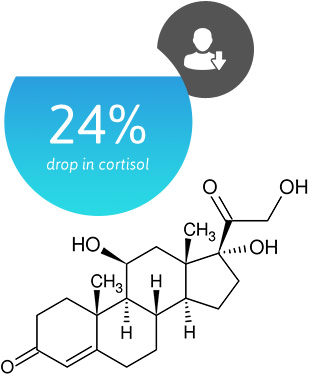
In a double-blind study conducted by Dawson Church, Ph.D., tapping was shown to produce, on average, a 24 percent drop in cortisol after just one hour of tapping. During that same hour of talk therapy without tapping, participants showed a much smaller drop in cortisol levels.

Research has shown that acupuncture, and potentially acupressure, as well, provides pain relief by increasing endorphin levels in the body. Since tapping engages acupressure points while also lowering cortisol, it's likely that tapping, like acupuncture, allows the body to release the endorphins that then relieve pain.

In other cases, like in someone who experiences chronic pain but has no physical conditions or abnormalities, such as someone who has debilitating back pain but has no herniated discs or other abnormalities, the brain may be creating very real physical pain in the body without an obvious physical trigger.

Fortunately, a growing amount of research is giving us a better understanding of what pain is and how to relieve it.


The incredible results that tapping has on alleviating chronic pain may be explained, at least in part, by its ability to access what are called meridian channels.


While knowledge of these channels dates back to ancient Chinese medicine, it wasn't until the 1960s that these threadlike microscopic anatomical structures were first seen on stereomicroscope and electron microscope images. These scans showed tubular structures measuring 30 to 100 micrometers wide running up and down the body. Described in a published paper by a researcher named Kim Bonghan, they are also referred to as “Bonghan channels.” As a reference point, one red blood cell is 6 to 8 micrometers wide, so these structures are tiny!

You can think of meridian channels as a fiber-optic network in the body. They carry a large amount of information, often electrical and often beyond what the nervous system or chemical systems of the body can carry. By accessing these channels while processing emotions, thoughts as well as physical conditions like pain, tapping is able to get to the root cause of chronic pain more quickly than other approaches can.

Because tapping sends calming, relaxing signals directly to the amygdala, it may also help us to override the brain's negativity bias more rapidly. By using tapping to neutralize what it thought were threats to its survival, we're able to reprogram the brain to support more positive experiences, such as pain relief, pleasure, and relaxation.


How to Start Using Tapping to Relieve Your Physical Pain...


There are a few great resources that can help you in getting started using Tapping for Pain Relief:

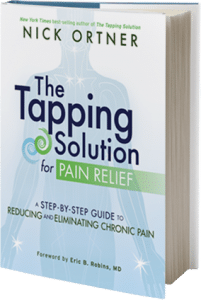
Resource #1 - The Tapping Solution for Pain Relief Book: A Step-by-Step Guide to Reducing and Eliminating Chronic Pain

If you're serious about wanting to eliminate physical pain from your body than this book is a must!
In this book I'll guide you on a journey that begins on the surface - tapping to address the pain itself - and then we'll move together to the deeper issues that often affect pain, addressing emotional pain, underlying beliefs, trauma, and much more.

With easy to follow tapping scripts and exercises you'll know exactly what to do to get relief.

There are many ways that brain and body can create, increase, and prolong pain.  After reading this book, you'll not only understand what's causing your pain but also how to achieve complete and lasting relief!

Go here to pick up your copy of this book today.


Resource #2 - Free Training

I'd love for you to join me on an upcoming free webinar presentation that I'm running on this topic.  This is a content-packed webinar where I will take you, step-by-step, through the process of discovering the unconscious emotional and energetic causes of your physical pain and how to use the Tapping to eliminate them.

To learn more about the webinar and join me, click here.


.

.

I hope you take advantage of these two resources.  I know they can help you.

If you have questions at any time please don't hesitate to ask.  Just send me an email by clicking here.  Or join me on Facebook here.

Until next time...

Keep Tapping!

Nick Ortner


What did you learn from this post? What questions do you still have? Post your comments below!

The blog post How to Use Tapping for Pain Relief was originally published to: The Tapping Solution's Blog

Tuesday, October 3, 2017

How to Use Tapping for Autoimmune Disorders

.
.
If you have been diagnosed with an autoimmune disease, and are struggling with the pain, the discomfort and the frustration, know that you are not alone!
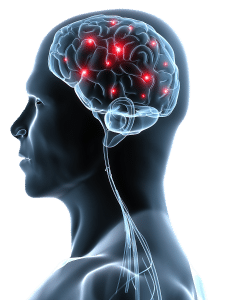
To date, there are about 100 known autoimmune illnesses, impacting up to 50 million Americans, according to the American Autoimmune Related Diseases Association (AARDA), and that number is on the rise.

Just being diagnosed with an autoimmune disease can be confusing and scary, if not totally overwhelming...

Sadly, according to our current, conventional medical system, there appears to be no cure, so treatment for autoimmune diseases focuses on relieving the symptoms...

But the most commonly used treatments often lead to devastating side effects!

And according to AARDA, it takes an average of nearly five years (and five doctors!) for a patient to receive a diagnosis, and in the meantime they often end up consulting multiple specialists for all their symptoms: a dermatologist, an endocrinologist, an immunologist, a neurologist, a rheumatologist...

Patients are often told by their doctors, “There’s nothing wrong with you,” or, “You’re just a little run down.”

This leads to a lot of frustration, overwhelm and stress that only makes these issues worse.

But here’s the good news: YOU may have more power to improve your health than you realize!


According to the Center for Disease Control (CDC) there is an emotional component in 85% of all illnesses!


As science has now proven, your thoughts and your patterns of belief produce chemical reactions in your body that affect your nervous system, as well as your digestive and endocrine systems, your hormones, your energy level, even your balance. And they all immediately and directly impact your immune system.

And most of the thoughts and emotions that drive us, roughly 95% of them, are run unconsciously so we're not even aware of them and the affect they're having on our body and our health.

In our modern society our high levels of stress, anxiety, overwhelm, and other negative emotions that we deal with on a regular basis put a tremendous strain on our immune system and our health.

And unfortunately our brains weren't wired to be able to understand and react differently to the stresses of our modern society versus the stresses that our ancestors faced, where there were real and tangible life or deaths threats on a daily basis.  You see,...


When stress hits us our body goes into what's known as "fight or flight," causing large parts of our brain to shut down and causing the chain of chemical reactions to take place that affect our health...


To make matters worse, when you go from “fight or flight” into a “freeze” state your body is effectively storing the stress of that moment.

Dr. Robert Scaer, a neurologist who has researched traumatic stress, has found that the “freeze” response encapsulates stress in our bodies, preventing us from moving on after a stressful event until we’ve found a way to release the stress that’s literally lodged in our bodies, in our muscles, even our cells.

With Tapping, we’ve found a quick and effective way to release this stress…

Here’s how it works…

Something stressful happens, or you start thinking about something stressful, like the the challenges you're having at work, at home with your kids, with your health or weight, or in your relationship...
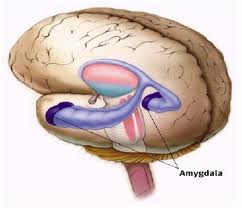
Within seconds, the part of your brain called the amygdala, the almond-shaped part of your midbrain, tells your body to release stress hormones.

Adrenaline and cortisol, which is often called “the stress hormone”, floods your body, affecting your digestive and endocrine systems, your hormones, your energy level, even your balance and more.

The functions that are needed for survival are given priority over the functions that are needed for healing.  This reaction from the primitive part of our brain was after all, necessary for  survival hundreds of years ago.

In the wild, if you were being chased by a threat like a tiger, bear or other human in the woods, you'd need to be able to run faster, jump higher, and react quicker.  The needed processes for healing would take a back seat until the body was once again calm and in a state where the life or death situation was gone.

In “fight or flight”, stress is literally limiting your ability to heal because the resources need to be diverted elsewhere.

The challenge is that in our modern society we have constant stressors that bring the body into fight or flight, just the same as it did hundreds of years ago, except these stressors happen much more frequently, causing us to be stuck in states of chronic stress.


When we’re under chronic stress, ours bodies stay in a state where healing is not the priority, and thus illness oftentimes follows.

If you ask yourself honestly…

“Am I dealing with any stress right now?”

You’ll probably say something like... “haha…of course I am! Who isn’t?!”  :)

But here's the great news...


EFT Tapping has been scientifically proven to rewire the brain to bring both the body and mind back into balance!


When you use Tapping to shift your unconscious beliefs and emotions, you shift the chemicals being released into the body. In doing so, you are literally able to shift your nervous system, as well as your digestive and endocrine systems, your hormones, your energy levels and more!

So far, modern science’s investigations into just why Tapping works have been astounding. The results reveal that Tapping is the perfect bridge between cutting edge Western medicine and ancient healing practices from the East.

Hundreds of studies have been performed that show the effects of using Tapping on health challenges.

One such study showed that using Tapping for Fibromyalgia improved variables such as pain, anxiety, depression, vitality, social function, mental health, performance problems involving work or other activities due to physical as well as emotional reasons, stress symptoms and more.

Another study showed that using Tapping for Psoriasis often brought immediate and sustained relief, and continued to improve over time. Participants from this study experienced significant improvement in functioning and psychological, emotional, and physical symptoms.

In another double-blind study conducted by Dawson Church, Ph.D., cortisol, know as the "stress hormone" was measured as it is a key indicator in how our bodies are responding to stress.

Tapping was shown to produce, on average, a 24 percent drop in cortisol after just one hour of tapping.   During that same hour of talk therapy without tapping, participants showed a much smaller drop in cortisol levels. This powerful research study showed that tapping significantly increases the ability to eliminate the the hormones causes by stress, allowing the body to go into a state of healing.

Study after study show that when you deal with the underlying emotional issues, the body is brought back into balance, and immune system function improves!


How to Start Using Tapping to Eliminate Negative Emotions and Chronic Stress to Bring Your Body Back into a Place of Balance and Healing...


There are a few great resources that can help you in getting started using Tapping for Pain Relief:

Resource #1 - Free Tapping Meditation on Befriending Your Body

This is a powerful meditation designed specifically to help your body get out of fight or flight.  Through this soothing and balancing meditation you'll:

-Understand the importance of creating a powerful relationship with your body that will lead you to quickly experience extraordinary results.

-Experience how your patterns of thinking and believing produce chemical reactions that affect the health of your body.

-Realize how you can quickly and painlessly shift your emotions, and create a powerful point of leverage to release the imbalance in your immune system.

To learn more and get immediate access to this free meditation go here.


Resource #2 - The Tapping Solution for Autoimmune Disorders Program with Dr. Kim D'Eramo

If you're serious about wanting to eliminate your autoimmune disorder than this program is a must!
We teamed up with Dr. Kim D'Eramo, a physician, speaker, bestselling author and expert on using Tapping for Autoimmune Disorders to bring you the most effective protocol possible.

With this program you get:

5 Powerful Audio Presentations that you can stream or download.

  • Introduction and Overview of the Autoimmune Disorder Program
  • Module 1: Breaking Free From the Vicious Cycle of Anger, Frustration and Hopelessness
  • Module 2: Family Patterns Contribute to Your Health, Just Not In The Ways You’ve Been Told.
  • Module 3: The Impact That Being Sensitive To Other People’s Energies And Emotions Can Have On Your Immune System.
  • Module 4: A Whole New Way of Looking at Improving Your Health Through Nutrition and Exercise

5 Tapping Meditation Audios These soothing Tapping Meditations will not only work to rewire the causes of the issues in your brain and body, they’ll also help you to instantly release anxiety, re-center yourself, and bring you to a place of peace and balance.10 PDF Transcripts so that you can read the information of the audio presentations.

Digital Workbook to go along with the introduction and 4 modules. This digital workbook will help guide you in the process.

To learn more about this program and how you can get immediate access to it, go here.

.

.

I hope you take advantage of these two resources.  I know they can help you.

If you have questions at any time please don't hesitate to ask.  Just send me an email by clicking here.  Or join me on Facebook here.

Until next time... Keep Tapping!

Nick Ortner

.

What did you learn from this post?  What questions do you still have?  Post your comments below!

.

How to Use Tapping for Autoimmune Disorders was first seen on: http://www.tappingsolution.com/

How to Manifest Your Heart’s Desire with Tapping

In celebration of the release of my new book, "The Tapping Solution for Manifesting Your Greatest Self", we've got a ton of bonuses and awesome prizes to give away.

You can check them out here, and take advantage of the book release contest while it lasts!

Today, I want to share with you one of the bonus workshop videos we had on Facebook for all of the folks who pre-ordered the book during the summer.

This was the first of a 2-part video series on "How to Manifest Your Heart's Desire with Tapping".

I hope you enjoy it!

Embed video here

Until next time...

Keep Tapping!

Nick Ortner


Did you learn a little bit about manifesting from the video? Leave your comment below. :)

How to Manifest Your Heart’s Desire with Tapping was originally published to: The Tapping Solution Blog

Research: Burned-out Teachers Feel Like New with EFT

Does tapping on the correct acupressure points really make a difference? These studies say they do – and helped teachers recharge themselves in the process.

In the world of psychology, EFT Tapping has received its share of criticism from those practicing cognitive and exposure therapies.

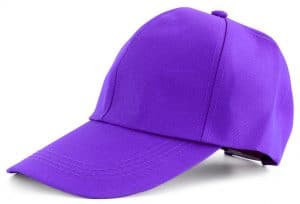
The main critique is one that is sometimes referred to as “The Purple Hat Fallacy,” where a therapist works with a client using a particular practice while wearing a purple hat, and then attributes the client’s progress to the hat rather than to the therapy.

The element of Tapping that has been most frequently called into question is the acupressure points. This is quite possibly because there’s been only a few studies examining this one element as a critical component of Tapping’s effectiveness.

Two recently published “dismantling studies” (studies that zoom in on one aspect of a treatment by giving a control group a substitution) have kicked off the conversation.

Both studies isolated the effectiveness of the acupressure points by teaching a sham Tapping method to control groups. And both resulted in the test group’s symptoms being reduced significantly more than the control group’s, indicating that there’s something substantial and necessary about tapping of the proper acupressure points in EFT.

The Next Step - Tapping for Tired Teachers

This paper’s author, Anne Reynolds, wanted to continue the focus of those two studies using a larger group of participants and focusing on a new context.

Specifically, she wanted to find out whether Tapping could be an effective tool to reduce burnout in public school teachers.

Burnout is a serious and widespread issue in public education, and proposed programs to remedy the issue have been too expensive for most districts to implement.

After an exhaustive search, Reynolds discovered EFT. If Tapping were effective in this context, she mused, it could mean an inexpensive and accessible solution to teacher burnout, having a highly positive impact on public education.

A veteran teacher herself, Reynolds used the The EFT Manual by EFT’s developer, Gary Craig, to design the instruction component. She then created her study using established tools that measure teacher burnout, which has three components: emotional exhaustion, depersonalization (a feeling of being detached from what’s happening around you), and professional accomplishment.

The tool measured numerous aspects of the three components using a scale of 0-6, similar to the scale used in assessing the intensity of symptom or emotional changes in Tapping.

The researcher worked with 126 full-time public school teachers in Illinois over a 4-week period. She wanted to make sure the control and the test groups did not mix, so she chose teachers from six different districts with similar demographics.

76 teachers from the test group and 47 from the control group completed the entire protocol. Both groups were provided with the exact same protocol with one exception: the control group was taught a “sham” method of Tapping that didn’t engage the proper acupressure points.

All participants agreed to tap every day for four weeks and then fill out another assessment form. They were also instructed to write in a journal about their experiences with Tapping, noting if they felt any changes throughout the study

No Purple Hat Here

What were the results?

The test group participants (using the proper acupressure points) experienced a significant reduction in burnout in all three areas: emotional exhaustion, depersonalization, and professional accomplishment.

The control group (using the sham acupressure points) had a reduction in emotional exhaustion but not as great as the test group. The control group also showed no significant changes in the other two areas.

Reynolds suggests that the physical component of the sham Tapping might have produced some soothing in the control group’s emotional exhaustion. She also notes that the final assessments for the control group happened just before winter break, which could have influenced participants’ sense of relief of emotional exhaustion.

Overall, Reynolds’ study provided the first look at EFT for teacher burnout AND added to the growing pile of convincing evidence that Tapping works as well as it does because of the specific acupressure points it utilizes. The study was also significant because of the large number of participants and the use of a control group.

I hope to see more of these types of studies continue because they’re proving what I already know to be true – Tapping works! 😊

Until next time,

Keep Tapping!

Nick Ortner


Do you sometimes feel burned out? Have you tried Tapping? Comment below.

The following article Research: Burned-out Teachers Feel Like New with EFT is available on: http://tappingsolution.com/